Ask a sleep specialist for advice and you will get a list: dim the lights, avoid screens, keep the bedroom cool, no caffeine after lunch, no alcohol near bedtime, no heavy meals late, keep a regular schedule. All of it is reasonable. Almost none of it becomes a habit, because a list of rules is not a routine.
A routine is a short sequence of actions, done in the same order, at roughly the same time, so often that you stop deciding to do them. That is what the last hour of the day needs.
What the research suggests
The transition from waking to sleep is not a switch. The National Heart, Lung, and Blood Institute describes how the body prepares for sleep over the evening: core temperature begins to fall, the hormone melatonin rises as light fades, and the drive to sleep that has been building all day reaches its peak. A consistent evening routine works with that process rather than against it. Doing the same calm things at the same time each night becomes a signal, and over weeks the body learns to respond to the signal.
The CDC and the National Institute on Aging both include a relaxing bedtime routine among their sleep recommendations, alongside a regular schedule, a dark and quiet bedroom, and avoiding large meals, caffeine, and alcohol close to bedtime. The NIA specifically notes that older adults often find it helpful to develop a bedtime routine and to keep it consistent.
Light deserves a particular mention. Bright light in the evening, including from phones and tablets held close to the face, can delay the rise of melatonin and make it harder to feel sleepy. The research on screens is still being refined, but the practical advice from sleep organizations is consistent: keep evening light dim and warm, and keep screens out of the last part of the evening where you can.
Why routines fail
Most evening routines fail for one of three reasons.
They are too long. A routine with eight steps takes an hour and feels like a second job. Nobody keeps it on a tiring day, and tiring days are exactly when it is needed.
They are too ambitious. Reading in a chair by candlelight sounds lovely and does not survive contact with a house that has a television in it.
They have no starting signal. Without a fixed moment when the routine begins, the evening drifts, one more episode becomes two, and the routine gets squeezed out.
How to start small
Set a lights-down time. This is not bedtime. It is the moment the evening changes gear: main lights off or dimmed, television off, phone put on charge somewhere other than the bedroom. Choose a time that is realistic for how you actually live, roughly an hour before you would like to be asleep.
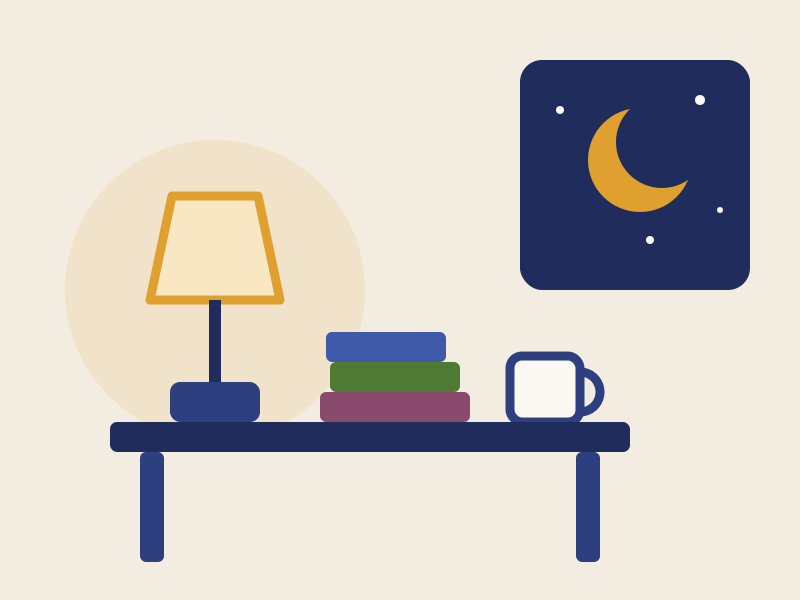
Choose three small actions. They should be things you can do on your worst evening, in the same order every time. Some examples: making a cup of something warm and caffeine-free; washing your face and brushing your teeth; ten minutes with a paper book; a few slow stretches; laying out tomorrow's clothes; writing three lines in a notebook about the day. Pick the three that feel most natural, and put them in an order that ends in the bedroom.
Do them in order, every night. Order matters more than content. The sequence is what the body learns.
Go to bed when sleepy. The routine prepares you; it does not command you. If you reach the end of the sequence and are not yet sleepy, sit in dim light with the book until you are, rather than lying in bed awake.
How to keep it
- Set an alarm for the lights-down time. One alarm, on a device that is not the phone you are trying to put away. When it goes off, the evening changes.
- Prepare the routine in daylight. The book on the nightstand, the mug by the kettle, the charger in the hallway. Anything that requires searching at ten at night will be skipped.
- Keep the bedroom for sleep. The NIA and other sleep organizations advise against working, eating, or watching television in bed, so that the bed itself becomes part of the signal.
- Do the routine even when you are away. A travel version, even a rough one, keeps the habit from breaking when you return.
- Judge by the week. Some nights will be poor regardless. Look at the pattern over a couple of weeks before changing anything.
Common questions
What if I fall asleep in front of the television? This is one of the most common sleep complaints in later life. Dozing on the sofa in the early evening takes the edge off the sleep drive and makes the real bedtime harder. The lights-down time is the answer: it moves the dozing into an actual bed.
Is a nightcap really a problem? Alcohol can make falling asleep easier and staying asleep harder, often causing waking in the second half of the night. Sleep organizations consistently advise avoiding it close to bedtime.
What about reading on a tablet? If a tablet is what you have, turn the brightness down, use a warm-light setting, and hold it further from your face. A paper book or a dedicated e-reader without a bright backlit screen is easier on the evening.
My partner keeps different hours. Does the routine still work? Yes, as long as your part of it is consistent. Many couples settle on a shared lights-down time for the main room and separate routines after that. What matters is that your own sequence stays the same.
When to talk to a clinician
If sleep problems persist for several weeks despite a consistent routine, or if you snore loudly, stop breathing during sleep, have painful or restless legs at night, or feel excessively sleepy during the day, talk to a healthcare professional. Some medications and health conditions affect sleep, and a routine alone will not address those. This article is general information, not personal medical advice.