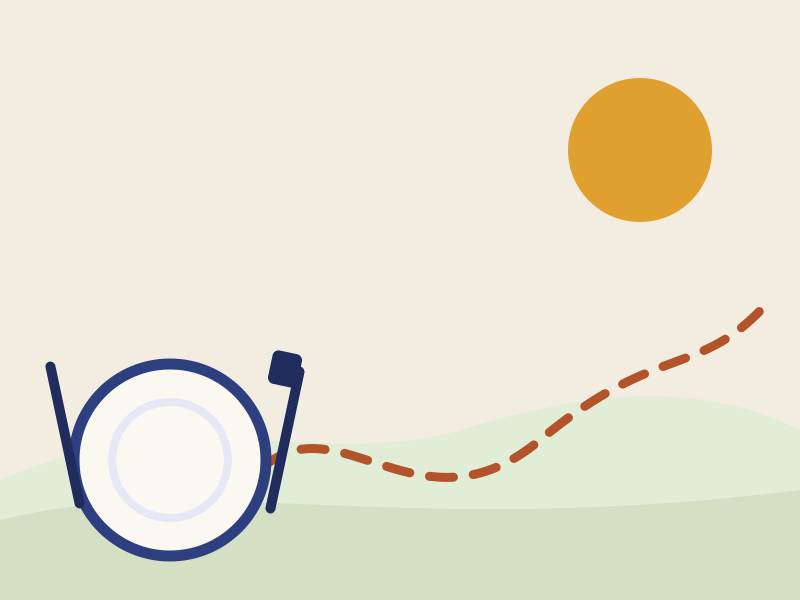
Most health habits ask you to find time. This one asks you to use time you already spend: the twenty or thirty minutes after a meal, when the plates are cleared and the day has not yet moved on to whatever comes next.
A short walk after eating is not new advice. Many cultures have a version of it, and many families have a grandparent who insisted on a stroll after dinner. What has changed is that researchers have started to look closely at why the habit seems to help, and the picture that is emerging is encouraging for people in midlife and beyond.
What the research suggests
When you eat, your body breaks the meal down into glucose, which enters the bloodstream. A rise in blood sugar after a meal is normal. What matters over the long run is how high it climbs and how long it stays elevated. Working muscles draw glucose out of the blood, and they do so with less need for insulin than resting muscles. That is the basic reason light activity after a meal is thought to help: it gives the glucose somewhere to go.
Research on this topic generally points in the same direction. Light activity after eating, such as easy walking, appears to be associated with a smaller rise in blood sugar compared with sitting still. The American Diabetes Association has for years encouraged adults to break up long periods of sitting with light activity, and the National Institute of Diabetes and Digestive and Kidney Diseases lists regular physical activity among the most important ways to support healthy blood sugar.
Timing seems to matter. Walking soon after the meal, rather than an hour or two later, is the version most often studied. And the walk does not have to be long or brisk. The point is not to burn off the meal. The point is to spend a little of the time after eating on your feet rather than in a chair.
It helps to keep expectations realistic. A ten-minute walk is a modest thing, and no single walk will change much. The value is in the pattern: the same small choice repeated across hundreds of meals a year. That is true of nearly every habit on this site, and it is worth saying plainly here.
Why this habit suits people over 40
There are practical reasons this particular habit tends to work well in midlife and later.
It has a natural cue. Habits attach best to things that already happen every day, and meals are among the most reliable events in anyone's routine. You do not need a reminder on your phone. Finishing the plate is the reminder.
It has a low barrier. There is no equipment, no change of clothes, and no need to get your heart rate up. If your knees or hips are not what they were, an easy walk on flat ground is usually well tolerated. If you are unsure, that is a question worth putting to your clinician, and we come back to it below.
It fits a social life. A walk after dinner with a spouse, a neighbor, or a grown child on the phone is time you might otherwise spend in front of a screen. Many people find the conversation is the part that keeps them doing it.
And it has a second benefit that people notice quickly: an easy walk after a meal often simply feels good. Many people report less of the heavy, sluggish feeling that can follow a large dinner. That is not a medical claim. It is a common experience, and it is one of the reasons the habit tends to stick.
How to start small
Pick one meal. For most people the largest meal of the day is dinner, and that is a sensible place to begin. Do not try to walk after every meal from the first week. One anchor, kept consistently, is worth more than three anchors abandoned by Thursday.
Decide on the route before you sit down to eat. Indecision is where habits go to die. A loop around the block, to the end of the street and back, or five minutes down a familiar path and five minutes home is all you need. If the weather is bad, walking the hallway of a building or slow laps through the house count. What matters is being upright and moving.
Keep the pace easy. This is not exercise in the usual sense. You should be able to talk comfortably the whole way. If you find yourself pushing, slow down. The research on post-meal walking does not depend on intensity.
Leave the dishes for later, or do them after the walk. A surprising number of people lose this habit to the kitchen. Decide once that the walk comes first, and the decision is made for good.
How to keep it
The first two weeks are the fragile part. A few things that tend to help:
- Tie it to a person. If someone else expects the walk, you are far more likely to take it. A standing invitation to a partner or a neighbor works better than any tracking app.
- Keep the shoes by the door. Small frictions matter more than most people expect. If putting on shoes means going upstairs, the habit has a leak. Keep a pair where you will pass them.
- Have a bad-weather version. Rain, heat, and dark evenings will all show up. Decide in advance what you will do instead: a shorter loop, a walk inside, or a few minutes of standing and stepping in place while the kettle boils. A smaller version of the habit is better than skipping it.
- Do not make up for missed days. If you miss a walk, you miss a walk. Tomorrow's meal brings a new one. Trying to compensate turns a light habit into a chore.
- Notice how you feel. Not on a scale, and not on a chart. Just pay attention over a few weeks to how evenings feel with the walk and without it. That awareness is often what turns a habit into a preference.
Common questions
What if I can only manage five minutes? Then walk for five. Research on breaking up sitting time suggests that even brief periods of light activity are better than none. Length can grow later; consistency comes first.
Should I wait before walking? An easy walk directly after a meal is generally comfortable for most people. If you feel unwell walking right away, give it fifteen or twenty minutes. Avoid vigorous activity immediately after a large meal.
Does it need to be a walk? No. Gentle housework, gardening, or tidying up also count as light activity. The walk is simply the easiest version to repeat, and the easiest to share with someone else.
Is it worth doing after breakfast and lunch too? Once the dinner walk is solid, adding a short walk after another meal is a reasonable next step. Many people find the lunch walk fits a workday well. Add it only when the first one no longer feels like a decision.
When to talk to a clinician
An easy walk is a low-risk activity for most adults, but it is worth a conversation with your clinician if you have a heart or lung condition, if you become short of breath or dizzy with mild exertion, if you have foot or joint pain that walking makes worse, or if you manage your blood sugar with insulin or other medication, since activity can affect how those medications work. This article is general information, not personal medical advice.